How to select an eccentric valve for water treatment? A selection guide for large-diameter valves, from clean water and wastewater to seawater.
How to select an eccentric valve for water treatment? A selection guide for large-diameter valves, from clean water and wastewater to seawater.
In water‑treatment projects, valves may appear to be mere components of the piping system; however, for large‑scale water plants, wastewater treatment facilities, raw‑water transmission systems, and seawater‑desalination projects, the valve’s design, sealing performance, materials, and operating characteristics can all significantly impact the overall system’s operation.
Especially Large-diameter water pipeline When valve sizes reach DN800, DN1000, DN1200, or even larger, selection can no longer be based solely on “size plus pressure rating.”
Why do many water treatment projects choose eccentric butterfly valves?
What is the difference between double eccentric and triple eccentric?
What are the differences among eccentric butterfly valves used for clean water, wastewater, and seawater?
When procuring large-diameter eccentric butterfly valves, which key parameters should be carefully verified?
This article, based on real-world water treatment operating conditions, systematically presents the applications of eccentric butterfly valves and outlines the principles for their selection.
I. What is an eccentric valve for water treatment?
“Water‑treatment eccentric valve” is not a standalone valve model; rather, it refers to valves with an eccentric design that are used in water‑treatment and related water‑system applications.
Among them, the more common ones are:
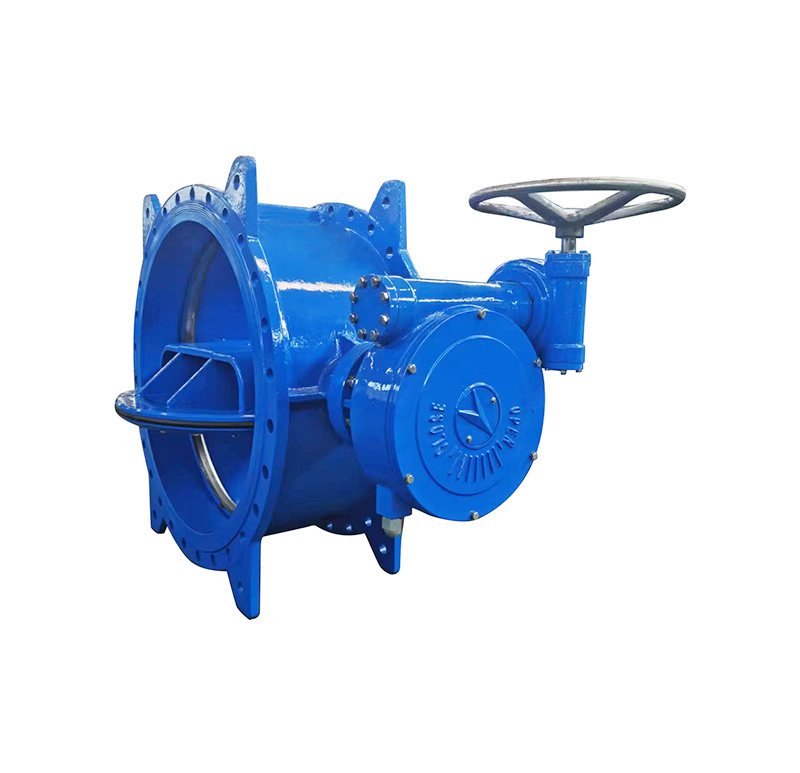
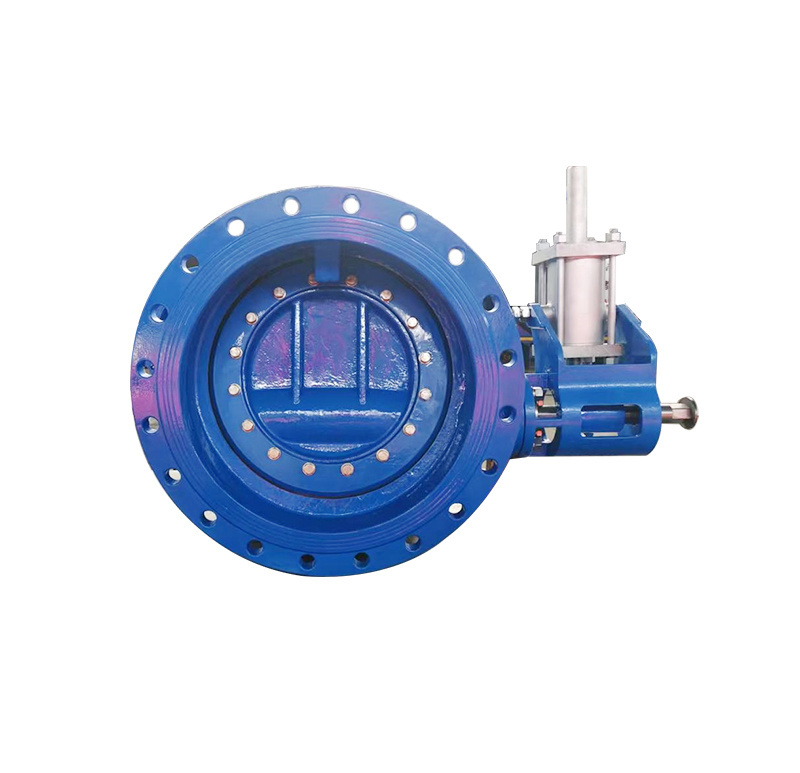
Double-eccentric butterfly valve
Triple-eccentric butterfly valve
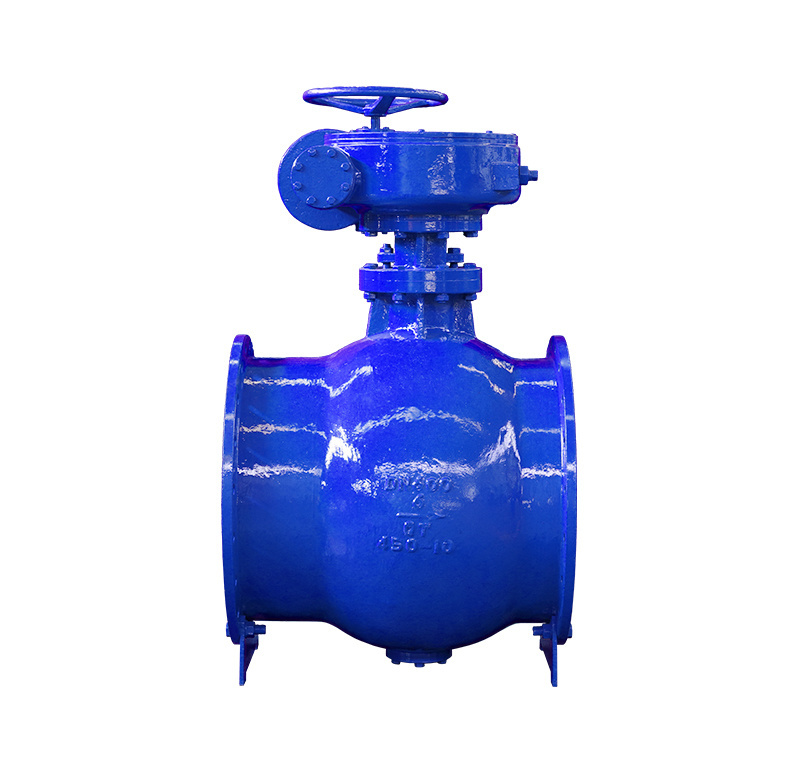
Eccentric hemispherical valve
Other eccentric‑type valves for water systems
In large-diameter water treatment pipelines, double-eccentric butterfly valves are particularly common.
Compared with conventional mid‑line butterfly valves, eccentric butterfly valves feature an eccentric design for both the valve stem and the disc. Taking a double‑eccentric butterfly valve as an example, the axis of the valve stem is offset relative to the center of the disc, which helps minimize continuous friction between the disc and the sealing surfaces during opening and closing.
Simply put:
Reduced friction → Lower seal wear → Beneficial for long-term operation.
This is also one of the key reasons why eccentric butterfly valves are well-suited for large-scale water systems.
II. Why are eccentric butterfly valves given greater attention in large-diameter water treatment pipelines?
Water treatment projects have one very distinct characteristic:
Piping typically has a large diameter, and valves often operate continuously over long periods.
As pipe diameters increase from DN200 to DN500, DN800, DN1000, and even DN1600 or DN1800, the considerations required for valve selection become increasingly complex.
Engineers typically must consider not only whether a valve can be closed, but also:
Sealing performance
Operating torque
Valve weight
Installation space
Pipeline pressure
Opening and closing frequency
Actuator matching
Post-maintenance
Medium characteristics
Large-diameter butterfly valves typically feature a compact structure and require relatively limited installation space.
Moreover, the eccentric design reduces friction between the valve disc and the sealing surface during opening and closing, making it well suited for large-diameter water systems that require reliable sealing and long-term operation.
Common applications include:
Raw water conveyance, urban water supply, water treatment plants, wastewater treatment plants, reclaimed water systems, pumping stations, and large-scale water transfer projects.
III. What exactly is the difference between double-eccentric butterfly valves and triple-eccentric butterfly valves?
This is a very common issue in water treatment projects.
Many people would think:
Does having one additional eccentricity compared to a double eccentric design necessarily make it better?
Actually, that’s not the case.
An increase in the number of eccentricities does not imply that it is suitable for all water treatment conditions.
The proper selection should take into account the process medium, pressure, temperature, sealing method, and project specifications.
Double-eccentric butterfly valve
Double-eccentric butterfly valves typically employ an elastic sealing design and are widely used in the water treatment industry.
Common operating conditions include:
Raw water
Clear water
Water supply
Wastewater
Reclaimed water
Industrial circulating water
Partial seawater system
If the project involves large‑diameter water transmission pipelines and places particular emphasis on reliable sealing, large bore sizes, and long‑term operation, double‑eccentric butterfly valves are typically a key option to consider.
Triple-eccentric butterfly valve
Triple-eccentric butterfly valves typically employ a metal hard-seal design.
By employing a specialized valve disc and seat geometry, friction on the sealing surfaces during opening and closing can be reduced.
Accordingly, such solutions are commonly employed in applications involving high‑temperature media, high‑pressure industrial fluids, metal hard‑seal configurations, and special industrial media that demand fire‑resistance performance.
However, for typical water treatment, wastewater treatment, and water supply projects, not every application requires a triple-eccentric butterfly valve.
If the fluid being conveyed is ambient‑temperature water, the first step is to verify the project’s specific requirements for the sealing method, pressure rating, and materials, rather than simply prioritizing a “three‑eccentric” design.
4. Are eccentric butterfly valves selected the same way for clean water, wastewater, and seawater?
Different.
This is a factor that is very easily overlooked in the selection of water treatment valves.
Although they all belong to “water,” their actual medium environments may be entirely different.
1. Clean water and raw water
The clear water and raw water systems typically focus on:
Sealing performance
Valve body material
Valve disc material
Sealing material
Anti-corrosion coating
Pressure rating
Flange Standard
If the project involves potable water, it is also necessary to further verify that the valve materials and related components meet the project’s hygiene and performance requirements.
2. Wastewater
One of the key differences between wastewater and clean water is that the former may contain:
Suspended solids
Particulate matter
fiber
Organic matter
Chemical composition
Therefore, sewage butterfly valves cannot be selected simply by analogy to clean-water butterfly valves.
When selecting equipment for a wastewater treatment project, further attention should be paid to:
Media composition + solid particles + sealing configuration + valve disc design + operating frequency + maintenance conditions
For example, in wastewater treatment plants, the operating conditions at different locations—such as influent and effluent points, pumping stations, and sludge-handling systems—may vary.
3. Seawater
One of the key issues that must be given careful consideration in seawater operating conditions is:
Corrosion.
Chloride ions in seawater can cause significant corrosion to certain metallic materials; therefore, when selecting a seawater butterfly valve, one should not rely solely on specifications such as DN1200 + PN16.
Further confirmation is required:
Valve body material
Valve disc material
Valve stem material
Sealing material
Fastener materials
Internal corrosion protection
External coating
Rubber lining
Galvanic corrosion between dissimilar metals
Depending on the specific project requirements, stainless steel, duplex stainless steel, aluminum bronze, and other corrosion-resistant materials may be used.
So:
The material selection for seawater butterfly valves requires consideration of more factors than that for standard freshwater butterfly valves.
V. Large-diameter eccentric butterfly valves: What should you really be paying attention to?
If you’re sourcing eccentric butterfly valves in sizes DN1000, DN1200, DN1400, DN1600, or even larger, we recommend not simply asking the manufacturer, “DN1200 PN16—how much?”
Because these two parameters are usually insufficient to determine the complete valve configuration.
At a minimum, the following information must be confirmed.
① Valve port diameter
For example:
DN800
DN1000
DN1200
DN1400
DN1600
DN1800
The larger the nominal diameter, the more critical it typically becomes to consider valve weight, operating torque, and transportation and installation requirements.
② Pressure rating
For example:
PN10
PN16
PN25
Class 150
The pressure rating shall correspond to the pipeline design pressure and the project standards.
③ Medium
This is very critical information.
It is necessary to clarify what the valve is conveying:
Raw water
Clear water
Drinking water
Wastewater
Reclaimed water
Seawater
Industrial circulating water
Even for a DN1200 PN16 size, the material and sealing configuration can vary significantly depending on the medium.
④ Sealing Method
Common ones include:
Soft seal and Metal hard seal
Elastic sealing structures are commonly used in water treatment projects, but the final choice should always be confirmed based on the project’s specific requirements.
⑤ Valve material
At a minimum, the following must be confirmed:
Valve body + valve disc + valve stem + seal
If used in seawater, additional verification of anti-corrosion and corrosion-resistant measures will be required.
⑥ Operating Mode
Depending on the level of project automation, you can choose:
Manual
Electric
Pneumatic
Hydraulic
If an electric actuator is used, further confirmation is required:
Power supply
On-off type or modulating type
Control signal
Opening feedback
Limit switch
Manual operation
Protection rating
Actuator output torque
These parameters all influence the final valve configuration.
6. Why might the price vary significantly even for DN1200 PN16?
If you’ve ever purchased a large butterfly valve, you may have noticed one thing:
Even for DN1200, PN16, quotes from different suppliers can vary significantly.
This is not necessarily just due to differences in supplier margins.
Because “DN1200 PN16” merely informs the manufacturer:
Size + Pressure
However, the manufacturer was not informed of the complete configuration.
For example:
The valve body materials differ.
The costs of materials such as ductile iron, carbon steel, and stainless steel vary.
The valve disc material is different.
Ductile iron, carbon steel, stainless steel, aluminum bronze, duplex stainless steel, and others all influence both cost and operating conditions.
The valve stem material is different.
The valve stem must simultaneously meet requirements for mechanical strength and corrosion resistance.
The sealing structures are different.
The structures and manufacturing requirements of soft seals and metal hard seals differ.
The actuators are different.
The configuration and price differences among manual, electric, pneumatic, and hydraulic actuators can be substantial.
The standards differ.
Different projects may adopt varying design, dimension, testing, and material requirements.
So: The same nominal size and pressure rating do not necessarily mean the same valve model.
This is also why large-scale water treatment projects should not be evaluated solely on the basis of a single unit price.
7. When procuring eccentric butterfly valves for a water treatment project, what information should be provided to the manufacturer?
If you would like the manufacturer to confirm the quotation more quickly and accurately, we recommend providing the following information at once:
Basic Parameters
Valve Type:
Double eccentric / Triple eccentric
Caliber:
DN + Quantity
Pressure:
PN10 / PN16 / PN25 / Class 150, etc.
Medium:
Clean water / Raw water / Wastewater / Seawater / Reclaimed water
Technical Specifications
Valve body material
Valve disc material
Valve stem material
Sealing material
Connection method
Flange Standard
Valve Length Standards
Sealing Grade
Operating method
Manual / Electric / Pneumatic / Hydraulic
Project Materials
If there is:
Technical Specification
Valve Data Sheet
Tender Documents
Valve List
Drawing
Material Requirements
It is best to provide all the information at once.
For project-based RFQs, Comprehensive technical information is often more valuable than simply providing a model number.
8. How can you quickly determine which type of eccentric valve is best suited to your needs?
You can follow the approach below:
Step 1: First, examine the medium.
Clear water?
Wastewater?
Seawater?
Or is it some other industrial medium?
↓
Step 2: Determine the caliber and pressure.
What’s the DN?
What’s the PN?
↓
Step 3: Determine the sealing method.
Soft seal?
Or is it still a metal hard seal?
↓
Step 4: Confirm the materials
What materials are used for the valve body, valve disc, valve stem, and seals, respectively?
↓
Step 5: Confirm the standards
Does the project require AWWA?
EN?
ISO?
Or is it the customer’s own technical specifications?
↓
Step 6: Determine the operating mode.
Manual?
Electric?
Pneumatic?
Hydraulics?
↓
Step 7: Confirm the installation requirements
Flange dimensions, face-to-face length, mounting orientation, actuator clearance, and site operating conditions.
This approach to selection is generally more sensible than simply searching for “the cheapest butterfly valve.”
9. Why shouldn’t you judge a water‑treatment eccentric valve solely on price?
For standard inventory procurement, price is, of course, a key factor.
However, for water treatment plants, wastewater treatment facilities, seawater desalination projects, and large-scale water transmission systems, valves are an integral part of the entire pipeline system.
If the wrong materials are selected in the early stages, the sealing method is inappropriate, or the actuator torque is insufficient, the problems that arise later could far outweigh the cost savings achieved during procurement.
Therefore, what truly needs to be compared when it comes to large-diameter water treatment valves is:
Is the structure appropriate?
Do the materials match?
Does the standard comply?
Does the seal meet the requirements?
Does the actuator match?
Does the manufacturer truly understand the project’s operating conditions?
Prices should be compared only when these conditions are essentially the same.
X. When selecting an eccentric valve for water treatment, the decision ultimately comes down to the operating conditions.
No single eccentric butterfly valve is suitable for all water treatment applications.
Although clear water, wastewater, and seawater all belong to the water system, they are exposed to different environmental media.
Similarly, although both DN1000 and DN1800 are large-diameter valves, they may still differ significantly in terms of design, torque requirements, actuator type, and installation.
Therefore, a more reasonable selection logic is: First, define the operating conditions; then, determine the structure. Next, select the materials; after that, specify the configuration. Finally, compare the costs.
For water treatment projects, a truly suitable valve is not necessarily the one with the lowest price; rather, it should be… Valves that are compatible with the project’s operating conditions, technical requirements, and piping system.
Conclusion
From raw water transmission to wastewater treatment, and from municipal water supply to seawater desalination projects, eccentric valves find extensive applications in large-scale water systems.
Especially for large-caliber projects, Double-eccentric butterfly valves, triple-eccentric butterfly valves, and other eccentric‑design valves , selection should be based on the specific medium, pressure, temperature, sealing requirements, materials, and project standards.
Zhengzhou Zhongnan Valve since 1988 The company began manufacturing valves and has long been dedicated to the water treatment sector, offering a product portfolio that includes double-eccentric butterfly valves, triple-eccentric butterfly valves, seawater butterfly valves, rotary ball valves, eccentric hemispherical valves, and flow‑and‑pressure regulating valves.
If you’re selecting valves for a water treatment plant, wastewater treatment, seawater desalination, or a large-scale water transmission project, it’s better to provide the manufacturer with the complete project specifications at once, rather than just specifying “size and pressure.”
The clearer the operating conditions, the more accurate the equipment selection; the more complete the parameters, the more reliable the quotation.
Previous


Transportation
Support air, land and sea transportation
Customization
Offering options for customers to customize
Enjoy A Discount
Customers can negotiate the purchase price

Phone/WhatsApp:
Email:


Get A Quote
Expand your business with a trusted partner
