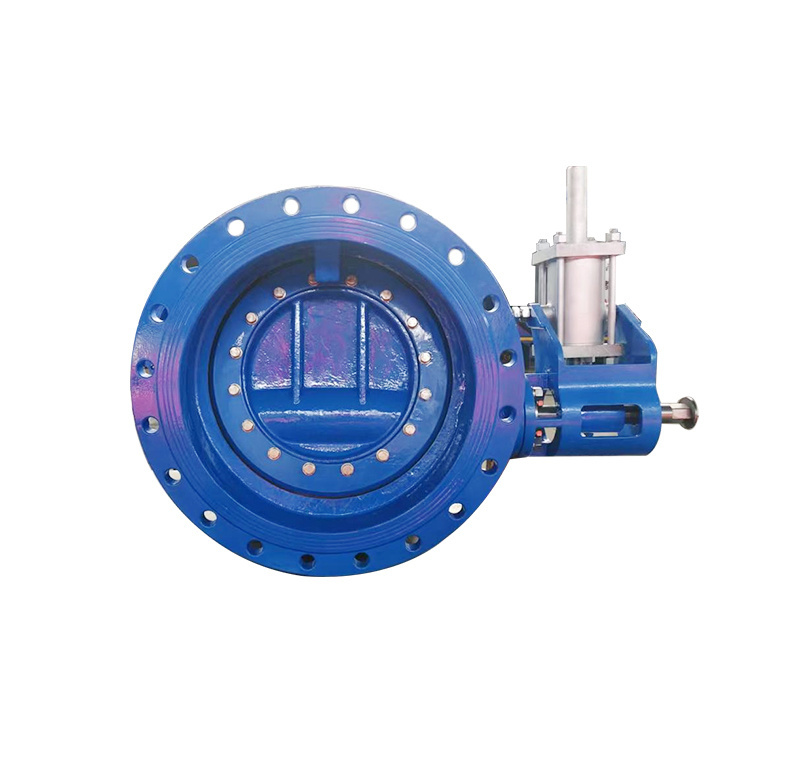
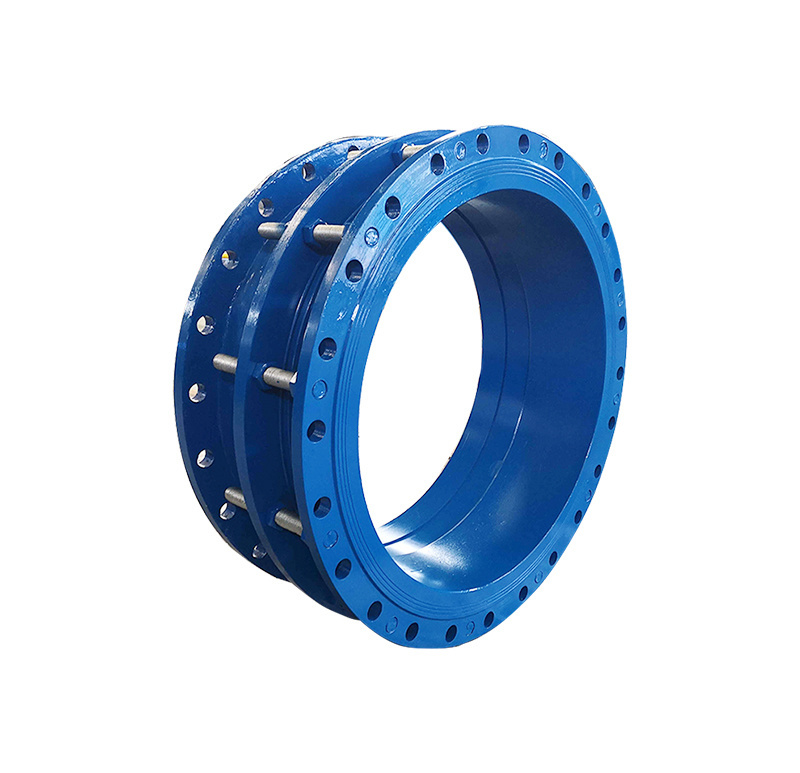
Double Eccentric Soft Seated Butterfly Valve: Design & Selection Guide
Double Eccentric Soft Seated Butterfly Valve: Design, Working Principle and Selection Guide for Water Treatment
Technical Guide | Water Supply | Wastewater Treatment | Industrial Water Systems
1. What Is a Double Eccentric Soft Seated Butterfly Valve?
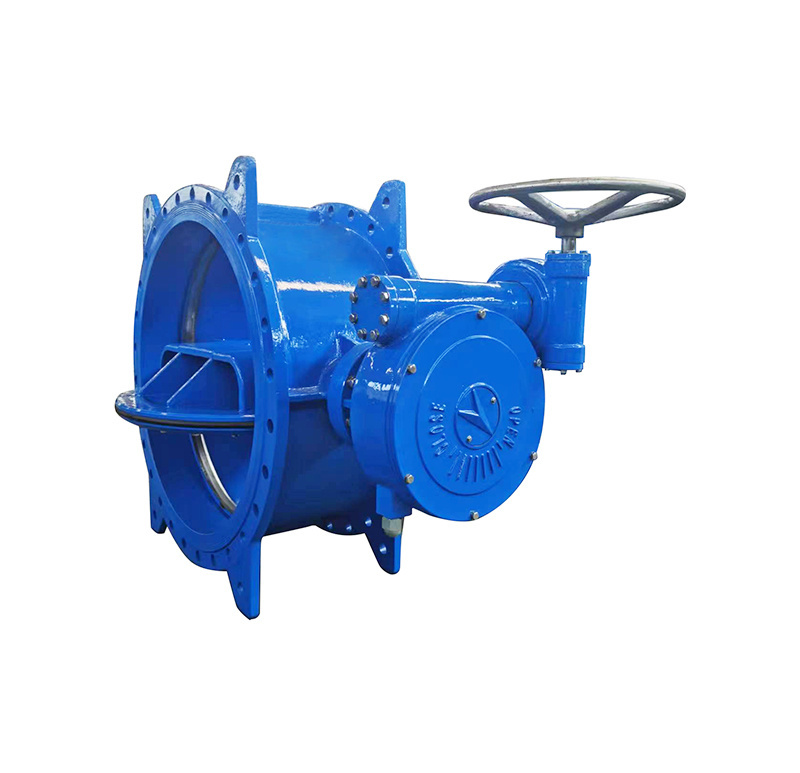
A double eccentric soft seated butterfly valve, also known as a double offset butterfly valve, is a quarter-turn valve designed for pipeline isolation and, where properly specified, flow control. Its disc rotates around an offset shaft arrangement, while an elastomeric seat provides the sealing interface when the valve is closed.
Unlike a conventional concentric butterfly valve, the double eccentric design moves the disc away from the seat during opening. This reduces rubbing contact over most of the operating stroke and helps limit wear on the resilient sealing surface.
Double eccentric soft seated butterfly valves are widely considered for municipal water supply, raw water transmission, wastewater treatment, pumping stations and industrial water circulation systems. Actual suitability depends on pressure, temperature, fluid composition, flow conditions and the specified leakage requirements.
2. Double Eccentric Butterfly Valve: Working Principle
The performance of a double eccentric butterfly valve is based on two geometric offsets between the shaft, disc and valve body. These offsets change the disc's rotational path compared with a concentric design.
2.1 First Offset: Shaft Offset from the Disc Sealing Plane
The first offset moves the shaft axis away from the plane of the disc's sealing surface. This changes the contact relationship between the disc and seat during rotation.
As the valve begins to open, the disc starts to move away from the seat rather than continuously sliding against it throughout the operating stroke.
2.2 Second Offset: Shaft Offset from the Pipeline Centerline
The second offset moves the shaft axis away from the central axis of the pipeline. Together with the first offset, this produces an offset rotational trajectory that helps the disc disengage from the seat during opening.
2.3 How Do the Two Offsets Improve Valve Performance?
- Reduce sliding contact between the disc and elastomeric seat.
- Help minimize sealing surface wear during repeated operation.
- Improve operating characteristics compared with a typical concentric design.
- Support reliable shut-off when the seat and disc are properly designed.
- Help extend seat service life under suitable operating conditions.
The actual operating torque is influenced by valve diameter, differential pressure, fluid conditions, seat interference, bearing friction and actuator configuration. Double offset geometry alone does not guarantee a specific torque reduction.
3. Why Are Double Eccentric Soft Seated Butterfly Valves Used in Water Treatment?
Water and wastewater systems often operate continuously and contain pipelines of different diameters, pressure classes and installation configurations. Valve selection must therefore consider more than initial purchase price.
3.1 Reduced Seat Wear During Operation
In a concentric butterfly valve, the disc maintains contact with the resilient seat during a substantial part of its rotation. The double eccentric configuration is designed to reduce this rubbing contact by moving the disc away from the seat as it opens.
This can help reduce wear on the elastomeric sealing surface, particularly in systems that require repeated valve operation.
3.2 Resilient Sealing for Water Applications
Soft seated butterfly valves typically use elastomers such as EPDM to provide a resilient sealing interface. When the valve closes, the disc sealing surface engages with the seat under the designed contact pressure.
EPDM is commonly considered for water service because of its water resistance and weathering properties. However, compatibility must be checked against water chemistry, disinfectants, temperature and any chemical additives.
3.3 Suitable Designs for Large-Diameter Pipelines
Large-diameter butterfly valves are commonly used in municipal water transmission, wastewater treatment plants and industrial circulation systems.
As nominal diameter increases, disc loading, shaft strength, hydraulic forces and actuator torque become increasingly important engineering considerations.
- Disc structural strength and deformation resistance.
- Shaft diameter, torsional strength and bending capacity.
- Bearing support and shaft alignment.
- Seat geometry and sealing interference.
- Body stiffness and flange connection strength.
- Actuator output torque and mounting arrangement.
4. Main Components and Materials of a Double Eccentric Butterfly Valve
A reliable double eccentric soft seated butterfly valve depends on the correct design and coordination of its major components. Material selection should be based on the actual operating conditions rather than a general material preference.
4.1 Valve Body
The valve body is the main pressure-containing component and connects the valve to the pipeline. Common material options include:
- Grey cast iron, such as GG25.
- Ductile iron, such as GGG40 or GGG50.
- Carbon steel, such as WCB.
- Stainless steel, such as CF8 and CF8M.
Ductile iron is commonly used in municipal water applications because of its mechanical properties and cost-effectiveness. More demanding corrosive environments may require alternative materials and protective systems.
4.2 Valve Disc
The disc controls the flow passage and forms part of the sealing interface. Common material options include ductile iron, stainless steel 304, stainless steel 316 and duplex stainless steel.
Disc material selection should consider corrosion resistance, fluid velocity, mechanical loading, pressure and the required service life.
4.3 Resilient Valve Seat
The valve seat is one of the most important components in a soft seated butterfly valve. It provides the elastomeric sealing surface that contacts the disc when the valve closes.
EPDM (Ethylene Propylene Diene Monomer)
EPDM is widely used in water service because of its resistance to water, weathering and ageing. Its suitability depends on the temperature, disinfectant concentration and water chemistry.
NBR (Nitrile Butadiene Rubber)
NBR is often considered where resistance to mineral oils and certain hydrocarbon-based fluids is required. Compatibility should be verified for the specific medium.
FKM (Fluoroelastomer)
FKM offers resistance to certain chemicals and higher-temperature environments. It is not automatically suitable for every water treatment application, so material compatibility must be confirmed.
4.4 Valve Shaft
The shaft transfers torque from the operating mechanism to the disc and supports disc rotation. Common material choices include 2Cr13, stainless steel 304, stainless steel 316 and 17-4PH.
Shaft design should account for torsional strength, bending loads, bearing support, connection geometry and corrosion exposure.
4.5 Bearings and Shaft Seals
Bearings support the shaft and help maintain alignment during rotation. Shaft sealing arrangements help prevent external leakage along the shaft area.
For wastewater and other demanding services, bearing materials, wear resistance, shaft sealing design and maintenance access should be carefully evaluated.
5. Double Eccentric vs. Concentric vs. Triple Offset Butterfly Valves
Although all three designs use a rotating disc to control flow, they differ in shaft geometry, sealing arrangements and typical application requirements.
| Comparison | Concentric | Double Eccentric | Triple Offset |
|---|---|---|---|
| Geometry | Concentric design | Two geometric offsets | Three geometric offsets |
| Typical seat | Resilient seat | Resilient or other specified seat designs | Commonly metal-to-metal |
| Disc movement | Contact with seat during rotation | Reduced seat contact during opening | Designed for cam-like seating and unseating |
| Typical applications | General low-pressure services | Water supply and wastewater systems | Higher-temperature or demanding industrial services |
| Key consideration | Simple construction | Balance of sealing, operation and cost | Temperature, pressure and metal-seat requirements |
5.1 Why Choose Double Eccentric Soft Seated Designs for Water Treatment?
For many conventional water treatment applications, engineers prioritize dependable shut-off, reasonable maintenance requirements and economical operation.
A double eccentric soft seated butterfly valve can provide a practical combination of reduced seat friction and resilient sealing performance when properly selected for the application.
For high-temperature, high-pressure or specialized industrial services, a triple offset metal seated butterfly valve may be more appropriate. The final selection should always follow the project operating conditions.
6. Typical Technical Specifications
The following table lists common configuration options for double eccentric soft seated butterfly valves. It is a general selection reference, not a guarantee that every combination is available for every size.
| Technical Item | Typical Options |
|---|---|
| Valve Type | Double Eccentric Soft Seated Butterfly Valve |
| Nominal Size | DN100 and above, subject to design range |
| Pressure Rating | PN10 / PN16, subject to design |
| Connection | Wafer / Lug / Double Flanged, as specified |
| Body Material | GG25 / GGG40 / WCB / Stainless Steel |
| Disc Material | Ductile Iron / SS304 / SS316 / Duplex |
| Seat Material | EPDM / NBR / FKM, subject to compatibility |
| Shaft Material | 2Cr13 / SS304 / SS316 / 17-4PH |
| Operation | Lever / Gearbox / Electric / Pneumatic |
| Media | Raw Water / Clean Water / Wastewater / Other Verified Media |
Note: Actual size range, pressure-temperature ratings, materials and connection dimensions must be confirmed against the manufacturer's approved drawings and technical documentation.
7. How to Select an Actuator for a Double Eccentric Butterfly Valve
Actuator selection is essential for reliable valve operation. The actuator must provide sufficient output torque under the specified operating conditions.
7.1 Manual Operation
Lever-operated and gearbox-operated valves are commonly used where operation is infrequent and remote control is not required. Gearboxes are often considered for larger sizes or higher operating torque requirements.
7.2 Electric Actuators
Electric actuators are suitable for remote operation and integration with automated control systems. Depending on the project, they may be configured for on-off or modulating service.
Modulating applications may use control signals such as 4–20 mA. The valve's flow characteristics and suitability for throttling must be verified before specifying this arrangement.
7.3 Pneumatic Actuators
Pneumatic actuators are commonly used in automated systems where a suitable compressed air supply is available. They can be configured for different operating and fail-safe requirements.
7.4 Key Factors in Actuator Sizing
- Maximum differential pressure across the valve.
- Required opening and closing torque.
- Fluid velocity and operating conditions.
- Seat friction and sealing interference.
- Actuator safety factor.
- Available electrical power or air supply.
- Required fail-open or fail-close position, where applicable.
8. Six Common Mistakes in Butterfly Valve Selection
8.1 Specifying DN and PN Without a Flange Standard
Different flange standards may specify different outside diameters, bolt circles, hole patterns and connection dimensions. The required standard, pressure class and applicable edition should be clearly identified.
8.2 Confusing Nominal Pressure with Operating Differential Pressure
PN is a nominal pressure designation. It should not be treated as the actual differential pressure across the closed valve. Maximum operating pressure, differential pressure and possible water hammer conditions must be considered separately.
8.3 Ignoring Water Chemistry and Temperature
Not all elastomers are compatible with every water treatment chemical. Disinfectants, acids, alkalis, temperature and long-term immersion conditions may affect seat performance.
8.4 Failing to Confirm Bidirectional Sealing Requirements
Some projects require shut-off performance in both flow directions. The purchaser should specify the required pressure direction, allowable leakage rate and applicable test criteria.
8.5 Overlooking Face-to-Face Dimensions
Different valve series and product standards may specify different face-to-face dimensions. For replacement projects, engineers should verify valve length, flange dimensions, shaft position and actuator clearance.
8.6 Considering Purchase Price Without Maintenance Requirements
Buyers should also evaluate whether the seat, bearings and shaft sealing components can be maintained or replaced, whether spare parts are available and whether a service kit can be supplied.
9. Typical Applications in Water and Wastewater Treatment
9.1 Municipal Water Supply
Double eccentric butterfly valves may be used in raw water transmission, clean water pipelines, pumping stations, distribution networks and water treatment plant pipelines.
9.2 Wastewater Treatment Plants
Typical applications include wastewater transfer, process pipelines and suitable sludge or return-water systems. Fluid solids content, abrasiveness and chemical composition should be evaluated before selecting the valve and seat materials.
9.3 Industrial Cooling Water Systems
These valves may be specified for industrial cooling water, circulating water networks and equipment isolation pipelines.
9.4 Seawater and Coastal Water Projects
Seawater service requires particular attention to chloride concentration, corrosion, temperature and flow velocity. Body protection, disc material, shaft material, fasteners and elastomer selection should all be evaluated for the actual seawater conditions.
Standard ductile iron and conventional stainless steel configurations should not automatically be considered suitable for every seawater application.
10. Quality Inspection and Performance Testing
Valve quality cannot be established by appearance or material certificates alone. Inspection and testing should be based on the applicable product standard and purchase specification.
- Shell Pressure Test: Verifies the pressure-containing integrity of the valve body.
- Seat Leakage Test: Evaluates shut-off performance under the specified test conditions.
- Operational Test: Checks smooth opening and closing without abnormal obstruction.
- Dimensional Inspection: Verifies face-to-face length, flange dimensions and connection details.
- Material Verification: Confirms specified materials for the body, disc, shaft and seat.
- Coating Inspection: Checks coating thickness, surface condition and adhesion requirements.
Test pressure, duration, leakage acceptance and inspection records should follow the applicable standard and contractual technical requirements.
11. Relevant International Standards
Different projects may require different product, flange, dimensional and pressure-testing standards. These standards serve different purposes and should not be treated as interchangeable.
11.1 EN 593 – Industrial Butterfly Valves
EN 593 specifies requirements for metallic butterfly valves used in industrial applications. It addresses valve design, construction, testing and related requirements.
11.2 AWWA C504 – Rubber-Seated Butterfly Valves
AWWA C504 covers rubber-seated butterfly valves within its defined scope for water-related applications. Its size, pressure and design requirements must be checked against the project specification and the applicable edition.
11.3 ISO 5752 – Metal Valves Face-to-Face Dimensions
ISO 5752 specifies face-to-face and centre-to-face dimensions for certain metal valves used in flanged pipe systems. The required series must be confirmed for the selected valve.
11.4 EN 1092-2 – Cast Iron Flanges
EN 1092-2 specifies requirements for circular cast iron flanges and their bolting dimensions. It should be checked when specifying compatible flanged connections.
11.5 ISO 5208 – Pressure Testing of Industrial Valves
ISO 5208 specifies pressure testing requirements for industrial valves, including shell and closure testing provisions. The applicable acceptance criteria should be identified in the purchase specification.
Important: Always verify the latest applicable editions, product scope, pressure class, dimensional series and project requirements before claiming compliance with any standard.
12. Engineering Selection Checklist: What Information Is Required?
A complete technical inquiry helps the manufacturer recommend a suitable valve configuration and prepare an accurate quotation. Before ordering a double eccentric soft seated butterfly valve, purchasers and engineers should confirm the following information.
| Required Information | Examples or Details |
|---|---|
| Nominal Diameter | DN100, DN150, DN300, DN600, etc. |
| Pressure Rating | PN10, PN16 or project-specific class |
| Medium | Raw water, clean water, wastewater, seawater |
| Temperature | Normal and maximum operating temperature |
| Pressure Conditions | Maximum working pressure and differential pressure |
| Connection | Wafer, lug or flanged |
| Flange Standard | EN 1092-2, AWWA or other specified standard |
| Materials | Body, disc, shaft, seat and fasteners |
| Operation | Manual, electric or pneumatic |
| Sealing Direction | Unidirectional or bidirectional requirement |
| Dimensions | Face-to-face length and installation space |
13. Frequently Asked Questions About Double Eccentric Soft Seated Butterfly Valves
Q1. What is a double eccentric soft seated butterfly valve?
It is a butterfly valve with two geometric offsets between the shaft, disc and sealing arrangement. An elastomeric seat provides shut-off sealing, while the offset design helps reduce rubbing contact during opening.
Q2. What is the difference between a concentric and a double eccentric butterfly valve?
A concentric butterfly valve has a central shaft arrangement and generally maintains disc-to-seat contact during rotation. A double eccentric valve uses two offsets to help the disc disengage from the seat during opening, reducing rubbing wear.
Q3. Is EPDM suitable for water treatment butterfly valves?
EPDM is commonly used for water service because of its resistance to water and weathering. Its suitability must still be checked against temperature, disinfectants, chemical concentration and the actual medium.
Q4. Can a double eccentric soft seated butterfly valve be used for wastewater?
Yes, it can be considered for many wastewater applications. However, suspended solids, abrasive particles, chemical composition, temperature and pressure must be evaluated before selecting the valve and sealing materials.
Q5. What is the difference between PN10 and PN16 butterfly valves?
PN10 and PN16 are nominal pressure designations. The appropriate rating depends on the pipeline design pressure, temperature, applicable standard and operating conditions. They should not be treated as direct substitutes without checking the technical requirements.
Q6. How do I select the correct actuator?
Actuator selection requires the valve operating torque, maximum differential pressure, operating frequency, power or air supply and required control mode. The actuator should be sized using the manufacturer's torque data and an appropriate design margin.
Q7. Can a double eccentric butterfly valve provide bidirectional sealing?
Some designs are engineered and tested for bidirectional shut-off. However, bidirectional performance should be explicitly specified and verified through the manufacturer's approved drawings and pressure test requirements.
Q8. What information is needed to request a quotation?
The main requirements include nominal diameter, pressure rating, medium, operating temperature, flange standard, connection type, body and disc materials, seat material, operation method and sealing direction.
14. Conclusion: Selecting the Right Double Eccentric Butterfly Valve
Selecting a butterfly valve for water treatment is not simply a matter of choosing a nominal diameter and pressure rating. Long-term performance depends on the relationship between valve geometry, sealing materials, fluid conditions, installation dimensions and operating requirements.
A double eccentric soft seated butterfly valve combines offset disc geometry with resilient sealing technology. When correctly engineered and selected, it can provide dependable shut-off performance and reduced seat friction in suitable water supply, wastewater and industrial water systems.
For engineers and procurement professionals, the best selection starts with a clear understanding of the actual application rather than relying on product appearance or price alone.
{ "@context": "https://schema.org", "@type": "TechArticle", "headline": "Double Eccentric Soft Seated Butterfly Valve: Design, Working Principle and Selection Guide for Water Treatment", "description": "A technical guide to double eccentric soft seated butterfly valves, covering two-offset geometry, EPDM sealing, materials, specifications, actuator selection, standards and water treatment applications.", "inLanguage": "en", "author": { "@type": "Organization", "name": "ZhongNan Valve" }, "publisher": { "@type": "Organization", "name": "ZhongNan Valve", "url": "https://www.zzvalves.com/" }, "mainEntityOfPage": { "@type": "WebPage", "@id": "https://www.zzvalves.com/" }, "about": [ { "@type": "Thing", "name": "Double Eccentric Butterfly Valve" }, { "@type": "Thing", "name": "Water Treatment" }, { "@type": "Thing", "name": "Wastewater Treatment" }, { "@type": "Thing", "name": "EPDM Sealing" } ], "keywords": [ "Double Eccentric Butterfly Valve", "Double Offset Butterfly Valve", "Soft Seated Butterfly Valve", "EPDM Seated Butterfly Valve", "Water Treatment Butterfly Valve", "Wastewater Butterfly Valve", "Large Diameter Butterfly Valve" ] } { "@context": "https://schema.org", "@type": "FAQPage", "mainEntity": [ { "@type": "Question", "name": "What is a double eccentric soft seated butterfly valve?", "acceptedAnswer": { "@type": "Answer", "text": "It is a butterfly valve with two geometric offsets between the shaft, disc and sealing arrangement. An elastomeric seat provides shut-off sealing, while the offset design helps reduce rubbing contact during opening." } }, { "@type": "Question", "name": "What is the difference between a concentric and a double eccentric butterfly valve?", "acceptedAnswer": { "@type": "Answer", "text": "A concentric butterfly valve has a central shaft arrangement and generally maintains disc-to-seat contact during rotation. A double eccentric valve uses two offsets to help the disc disengage from the seat during opening, reducing rubbing wear." } }, { "@type": "Question", "name": "Is EPDM suitable for water treatment butterfly valves?", "acceptedAnswer": { "@type": "Answer", "text": "EPDM is commonly used for water service because of its resistance to water and weathering. Its suitability must still be checked against temperature, disinfectants, chemical concentration and the actual medium." } }, { "@type": "Question", "name": "Can a double eccentric soft seated butterfly valve be used for wastewater?", "acceptedAnswer": { "@type": "Answer", "text": "Yes, it can be considered for many wastewater applications. Suspended solids, abrasive particles, chemical composition, temperature and pressure must be evaluated before selecting the valve and sealing materials." } }, { "@type": "Question", "name": "What is the difference between PN10 and PN16 butterfly valves?", "acceptedAnswer": { "@type": "Answer", "text": "PN10 and PN16 are nominal pressure designations. The appropriate rating depends on pipeline design pressure, temperature, applicable standard and operating conditions." } }, { "@type": "Question", "name": "Can a double eccentric butterfly valve provide bidirectional sealing?", "acceptedAnswer": { "@type": "Answer", "text": "Some designs are engineered and tested for bidirectional shut-off. Bidirectional performance should be explicitly specified and verified through approved drawings and pressure test requirements." } } ] }


Transportation
Support air, land and sea transportation
Customization
Offering options for customers to customize
Enjoy A Discount
Customers can negotiate the purchase price

Phone/WhatsApp:
Email:


Get A Quote
Expand your business with a trusted partner
